
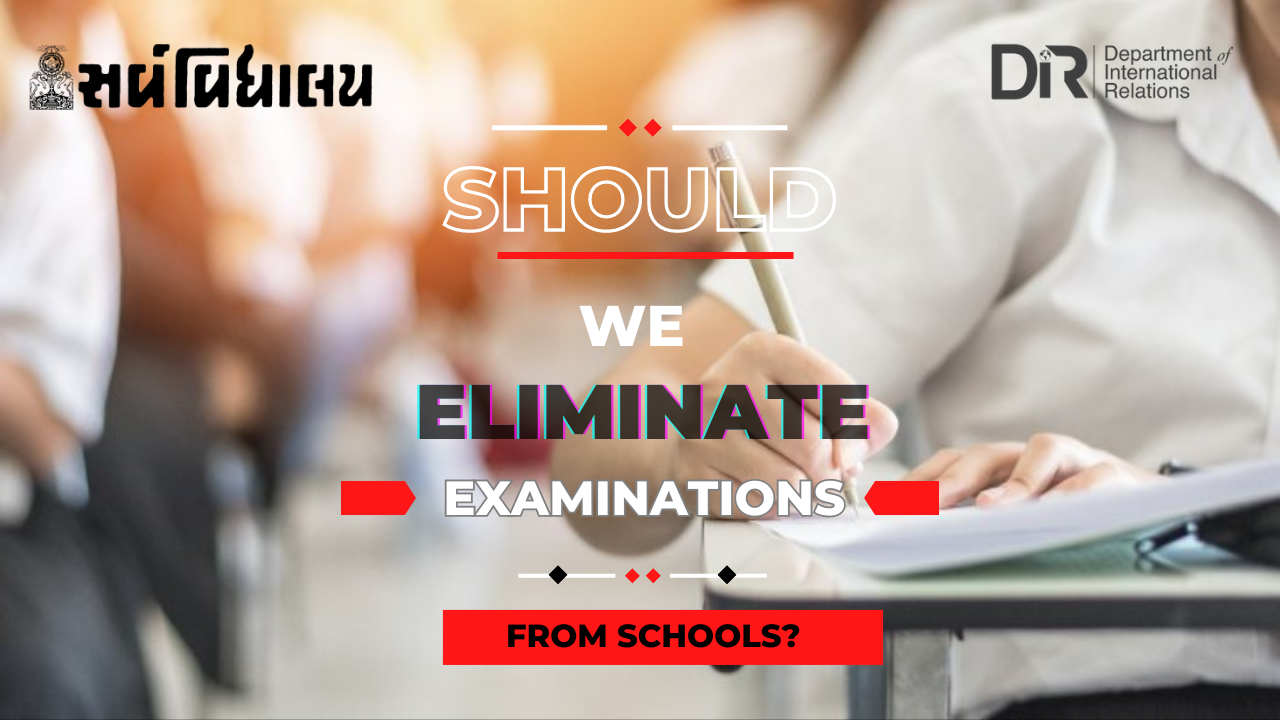
Would it not be incredible if the pressure of examinations was lifted from every school in our country? Would it not be wonderful if children did not have to stress about their marks, grades and ranks in the classroom? Would it not be exciting to learn for the simple joy of learning, rather than performing in an exam?
Although, on the flipside, would it really be so wonderful to not have any standardised measure of assessing learning outcomes?
The debate of whether or not examinations should be eliminated is one where both sides are equally valid. When we assess children through exams, we try to measure their learning based on a small set of selected questions. This assessment may not always be the best method of testing a student’s learning; in fact, it tends to measure their memory and speed more than the application of knowledge. For several decades, examinations have primarily measured rote-learning over true understanding of the concepts.
Perhaps, we need to get innovative with our examinations and assessment styles. We need to account for how unique all our students are, how their learning abilities are different from each other, and then create a wide range of internal assessments which measure a much wider range of learning outcomes and skillsets.
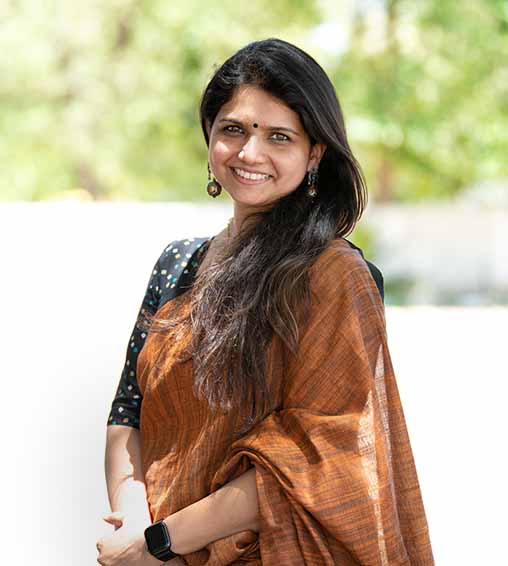
Education is much more than rote-learning; it is the holistic growth and development of a student and it is a space where they can embrace and enhance all of their talents.
Dr. Jinal Joshi
Education is much more than rote-learning; it is the holistic growth and development of a student and it is a space where they can embrace and enhance all of their talents.
Dr. Jinal Joshi