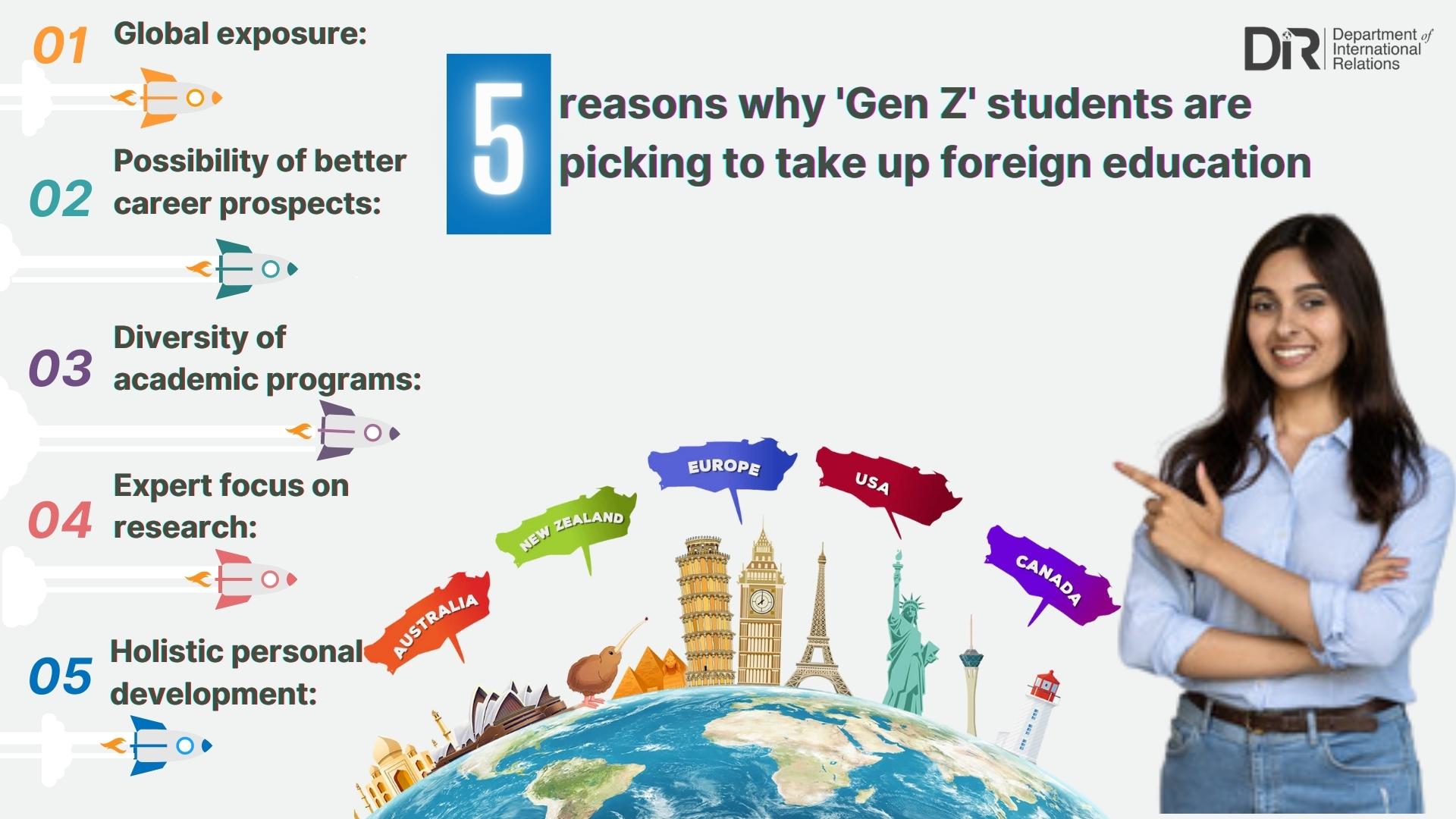
5 reasons why ‘Gen Z’ students are picking to take up foreign education
It is no surprise that most Indian students aspire for a foreign degree for their higher education, and destinations like the USA, UK and Canada are the most popular choices.
Here are a few reasons why students apply to international institutes for their undergraduate and post-graduate studies:
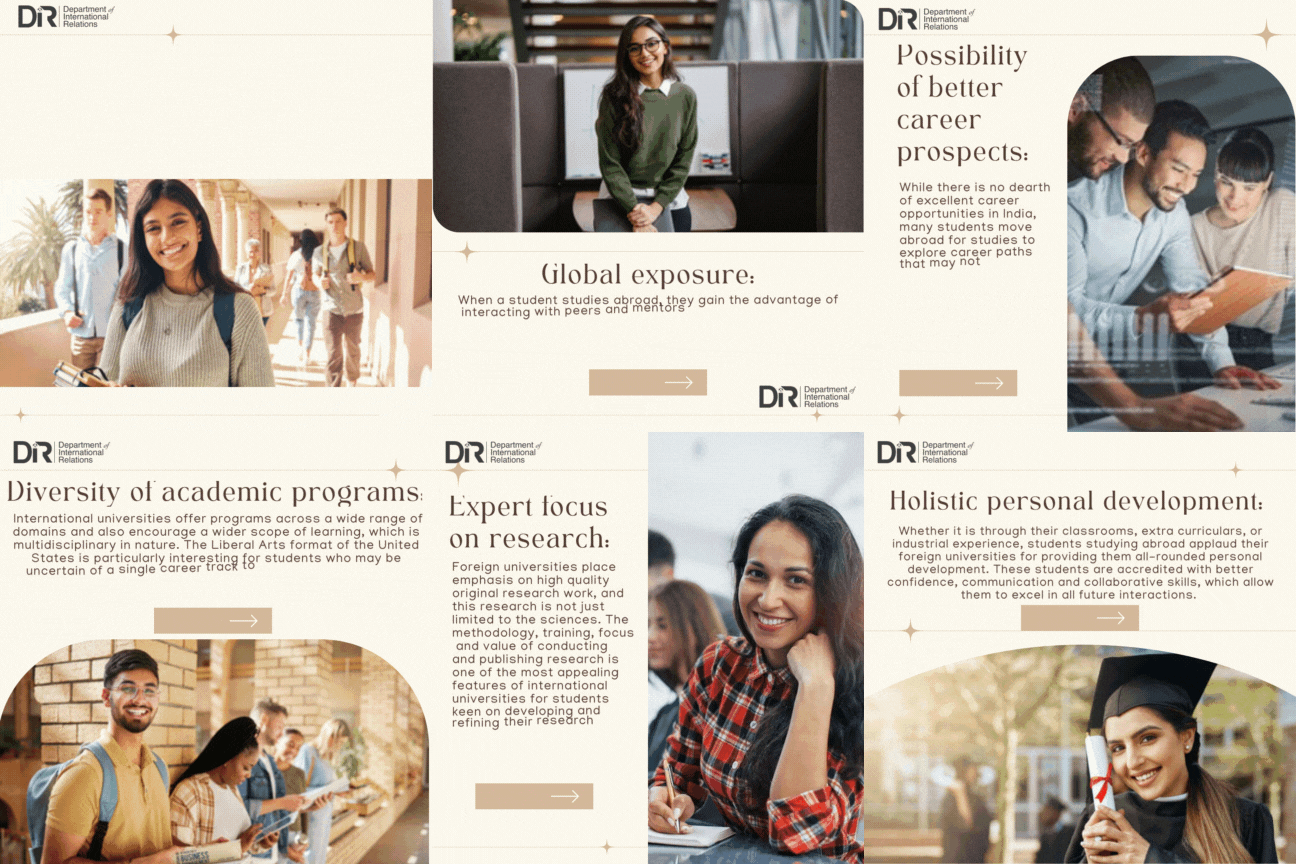
Global exposure:
When a student studies abroad, they gain the advantage of interacting with peers and mentors from all over the world. This global exposure adds a new lens of perspective, which broadens their mindset and allows them to look at the world in a unique way from different cultures.
Possibility of better career prospects:
While there is no dearth of excellent career opportunities in India, many students move abroad for studies to explore career paths that may not be too popular here. They also consider the factors of better quality of life that accompany the professional lives abroad.
Diversity of academic programs:
International universities offer programs across a wide range of domains and also encourage a wider scope of learning, which is multidisciplinary in nature. The Liberal Arts format of the United States is particularly interesting for students who may be uncertain of a single career track to focus on; students can simultaneously pursue subjects across the sciences, humanities, business, creative arts and more.
Expert focus on research:
Foreign universities place emphasis on high quality original research work, and this research is not just limited to the sciences. The methodology, training, focus and value of conducting and publishing research is one of the most appealing features of international universities for students keen on developing and refining their research abilities.
Holistic personal development:
Whether it is through their classrooms, extra curriculars, or industrial experience, students studying abroad applaud their foreign universities for providing them all-rounded personal development. These students are accredited with better confidence, communication and collaborative skills, which allow them to excel in all future interactions.