
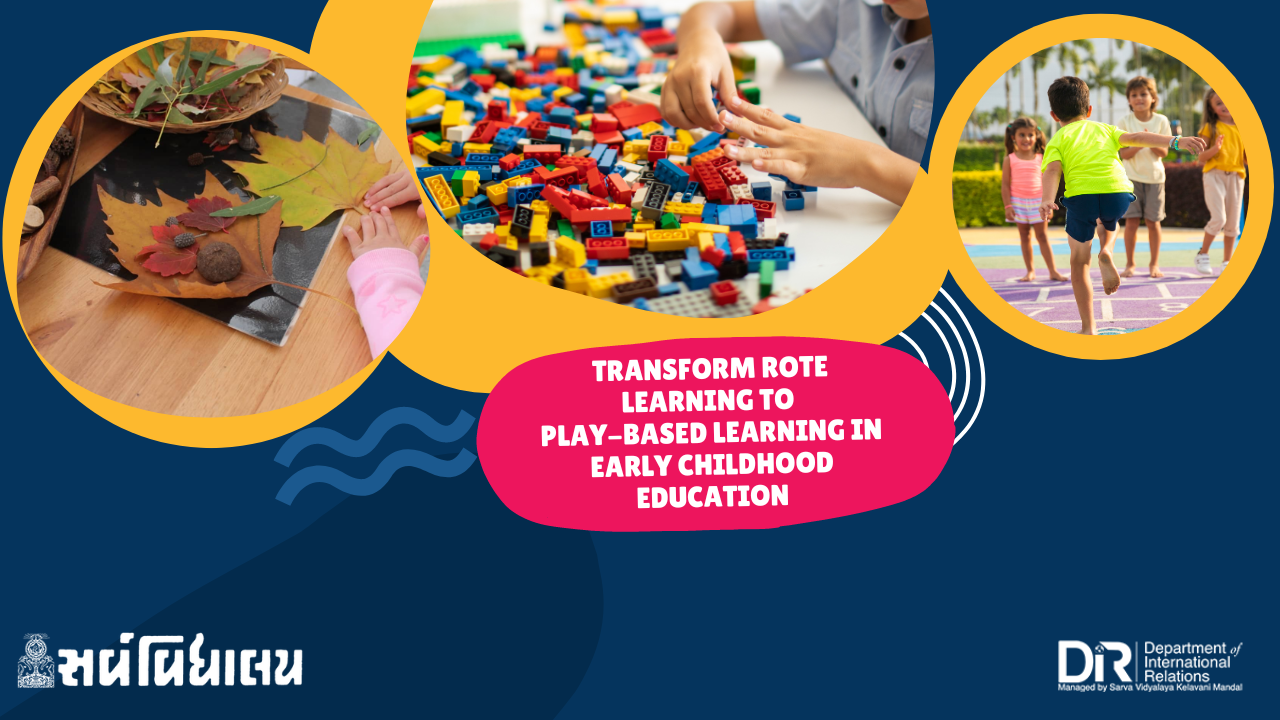
Early Childhood Education, or commonly known as ECE, is the educational framework where teachers work with kids from age 1 to age 6 years. This is the fundamental age group where the most development can occur; this involves cognitive, linguistic, emotional, physical, and social development. Children attend formal or informal setups of learning, where they interact with other peers and a specialised educator who is trained to engage and care for such young kids.
Several decades of education have focused on memorisation and rote learning as the central teaching methodology. However, as times have drastically changed, the focus of learning has shifted from retaining memory to application of knowledge. This requires a significant shift in how we teach and what we teach.
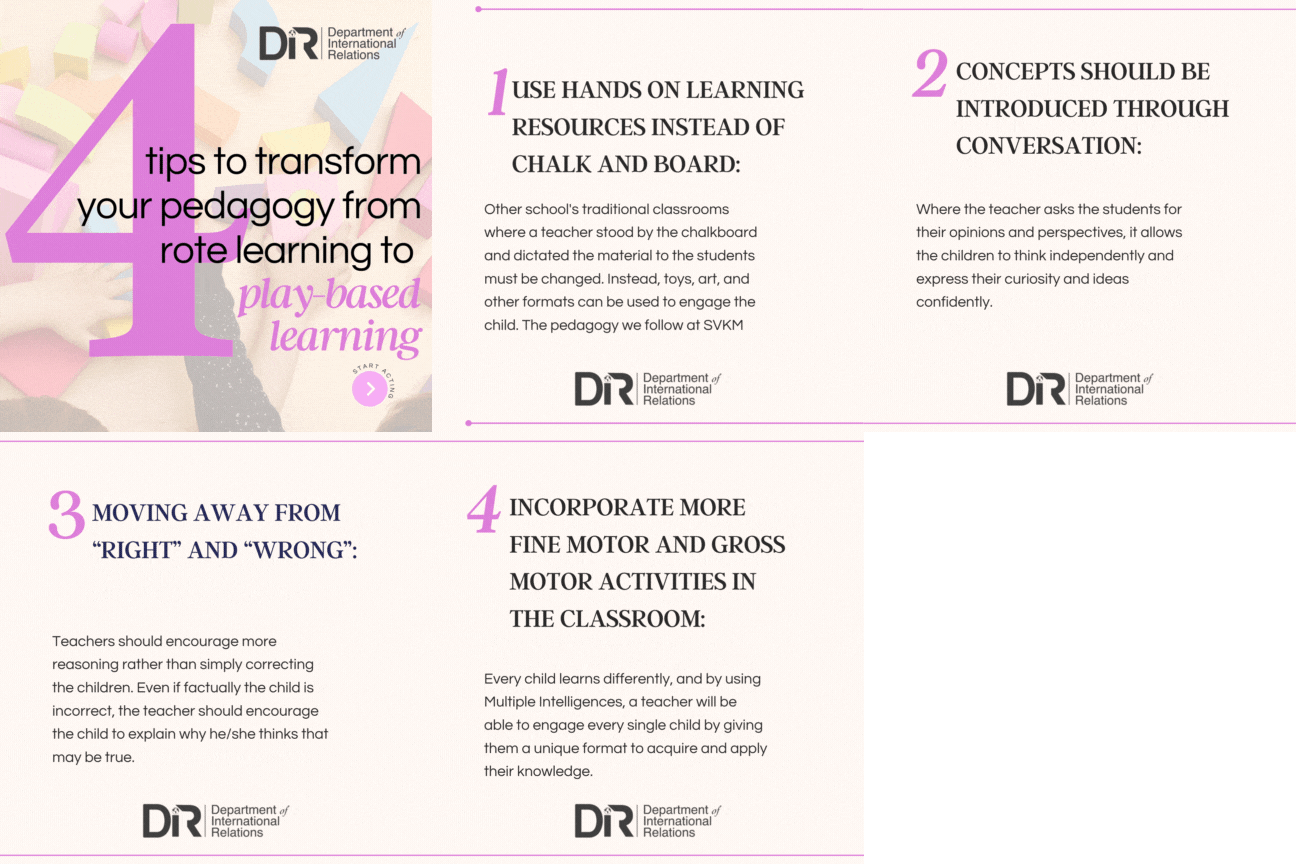
Here are a few tips to transform your pedagogy from rote learning to play based learning:
Use hands on learning resources instead of chalk and board:
Our traditional classroom where a teacher stood by the chalkboard and dictated the material to the students must be changed. Instead, toys, art and other formats can be used to engage the child.
Concepts should be introduced through conversation:
Where the teacher asks the students for their opinions and perspectives, it allows the children to think independently and express their curiosity and ideas confidently.
Moving away from “right” and “wrong”:
Teachers should encourage more reasoning rather than simply correcting the children. Even if factually the child is incorrect, the teacher should encourage the child to explain why he/she thinks that may be true.
Incorporate more fine motor and gross motor activities in the classroom:
Every child learns differently, and by using Multiple Intelligences, a teacher will be able to engage every single child by giving them a unique format to acquire and apply their knowledge.

“Young children learn better by interacting with things that are meaningful to them.”
Dr. Jinal Joshi